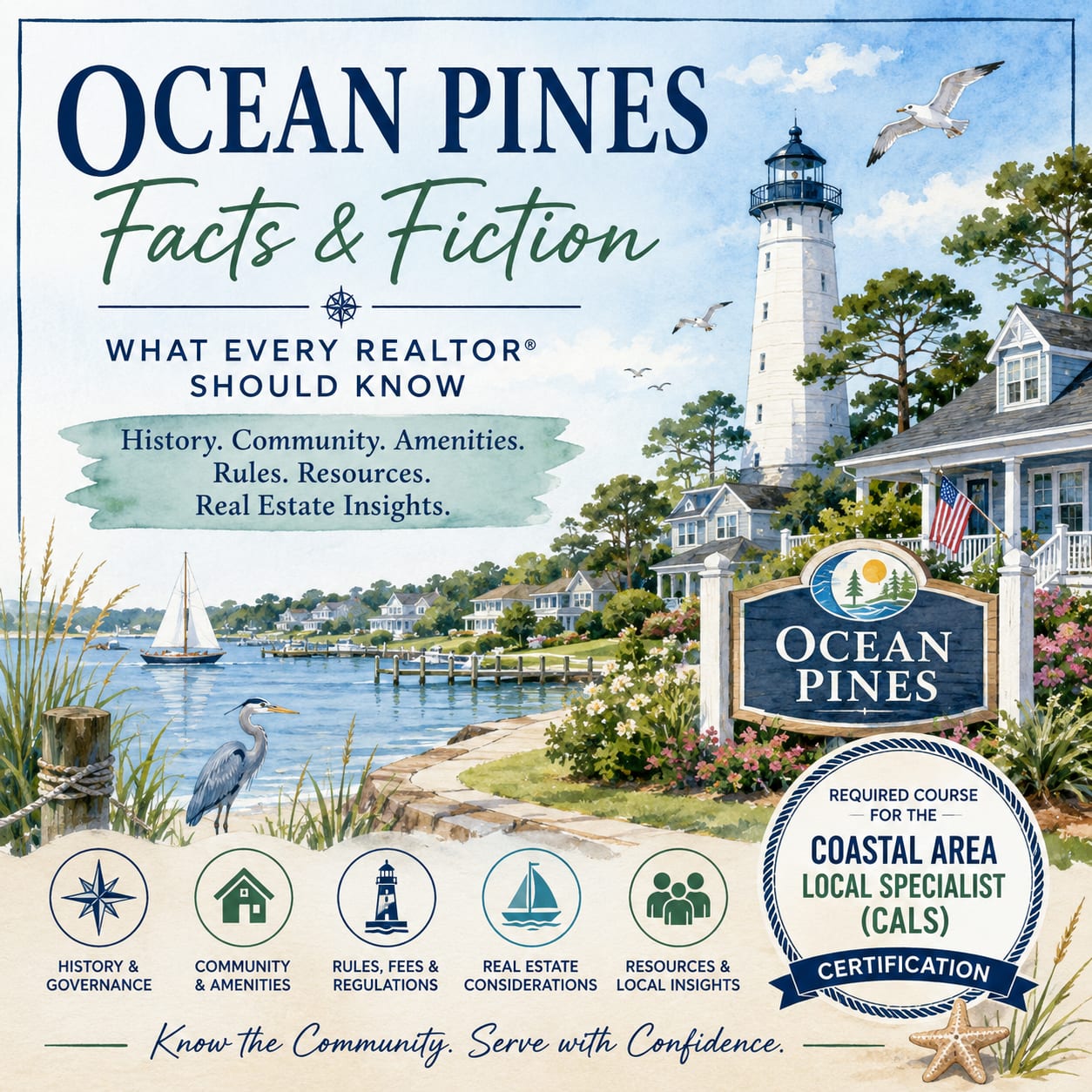
Ocean Pines: Facts & Fiction
9/23/26 Session One: 9:00 - 10:30AM
Location
Training Room
Speakers
-
Sharyn O'Hare - Coldwell Banker Realty-Salisbury
-
Marlene Ott - Berkshire Hathaway HomeServices PenFed Realty - OP
Summary
Ocean Pines: Facts & Fiction, What Every REALTOR® Should Know
Non-credit Course
Separate myth from reality and gain a deeper understanding of one of the Eastern Shore’s most unique residential communities. This informative course explores the history, governance, neighborhoods, amenities, regulations, and real estate considerations that make Ocean Pines a distinctive market for buyers, sellers, and real estate professionals.
Participants will learn how Ocean Pines was developed, how its sections and lot designations are organized, and what REALTORS® need to know about waterfront properties, bulkheads, restrictive covenants, HOA fees, transfer fees, and community governance. The course also examines the role of the Ocean Pines Association, community services, recreational amenities, rental regulations, and the many lifestyle benefits available to residents.
In addition, attendees will gain practical insights into issues that can impact real estate transactions, including water and sewer service areas, flood insurance considerations, road ownership, neighboring communities, schools, utilities, medical services, and local resources. Whether you are new to the Ocean Pines market or looking to strengthen your local expertise, this course provides valuable knowledge to help you better serve your clients and confidently navigate Ocean Pines real estate.
As a required course for the Coastal Area Local Specialist (CALS) Certification, this class equips real estate professionals with the local knowledge and community-specific insights necessary to demonstrate expertise in one of the region’s most sought-after markets.
Key Topics Include:
• History and development of Ocean Pines
• Understanding sections, lot designations, and legal descriptions
• HOA structure, fees, and community governance
• Waterfront properties, bulkheads, and maintenance responsibilities
• Amenities, clubs, marinas, pools, golf, and recreation
• Rental licensing and short-term rental considerations
• Flood insurance and infrastructure issues
• Nearby communities, schools, utilities, and healthcare resources
• Common misconceptions and frequently misunderstood aspects of Ocean Pines ownership
This course is ideal for REALTORS®, brokers, and real estate professionals seeking a comprehensive overview of Ocean Pines and the factors that influence property ownership and transactions within the community while fulfilling a requirement toward earning the Coastal Area Local Specialist (CALS) Certification.
1/8 courses required to obtain the CALS Certification.
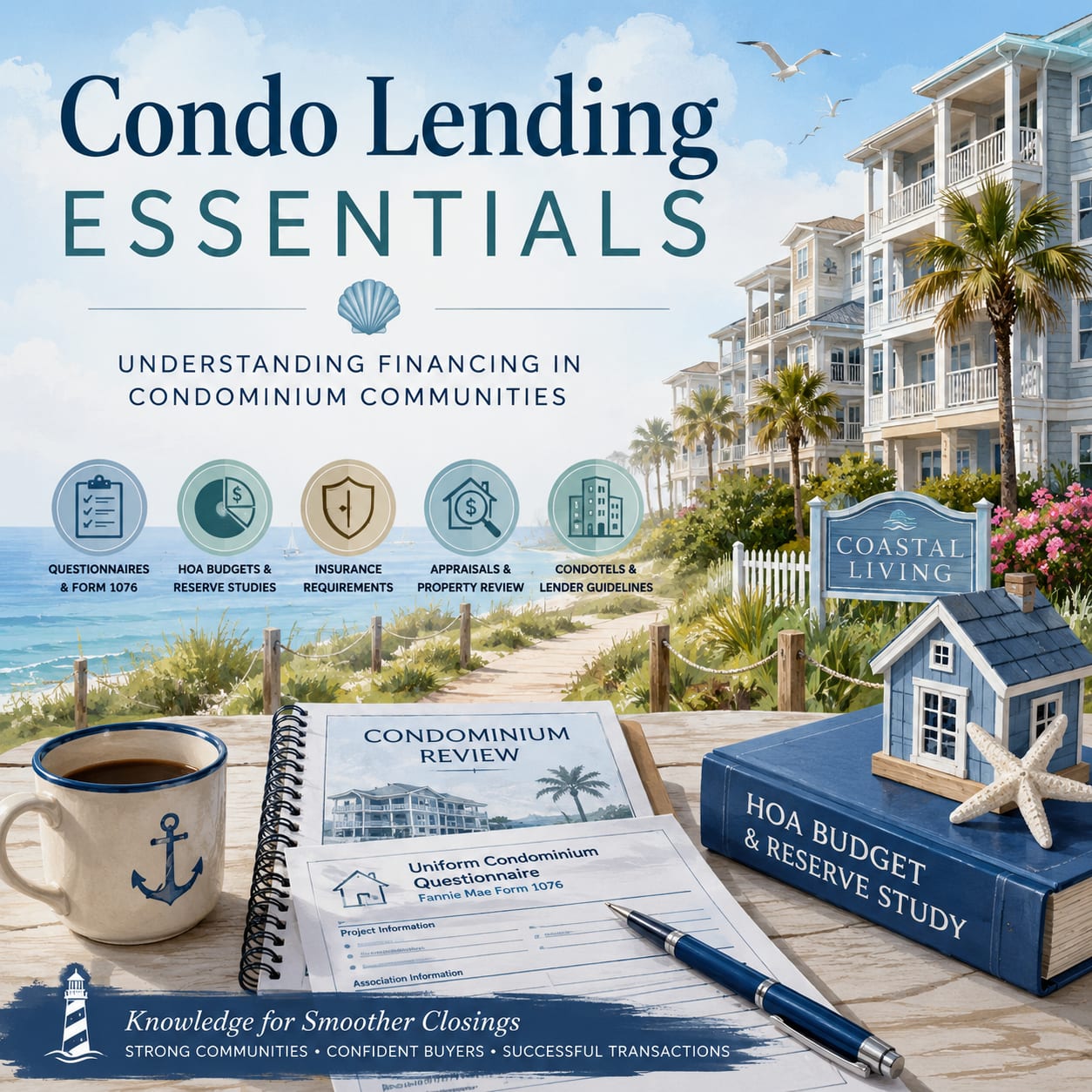
Condominium & Second Home Financing
9/23/26 Session Two: 10:45AM-12:15PM
Location
Training Room
Speakers
-
Jason Cook - Embrace Home Loans
Summary
Financing condominiums and second homes in coastal markets comes with its own set of rules, documentation requirements, and potential red flags. This session gives real estate professionals a practical understanding of the lending review process so they can better prepare clients, manage expectations, and recognize issues that may affect contract timelines or loan approval.
Participants will review the most common condo lending documents, including the Fannie Mae Form 1076 questionnaire, HOA budgets, insurance requirements, and appraisal considerations. The course explains why condo questionnaires matter, what changed with the newer 1076 form, whether alternate questionnaires may be used, and how lenders review project details. Attendees will also learn when HOA budgets are required, how reserve studies may come into play, and what budget-related concerns can signal financing challenges.
The session also covers the “Big 4” areas of project insurance: property, liability, fidelity, and flood coverage. In addition, participants will explore appraisal considerations, including when a property inspection waiver may or may not be acceptable, and what lenders look for during review. The course concludes with an overview of condotels, including definitions, examples, and key differences between Fannie Mae and Freddie Mac guidelines.
By the end of this class, attendees will have a stronger working knowledge of condominium and second-home financing issues and will be better equipped to identify questions, documents, and potential obstacles early in the transaction. The attached outline identifies core topics including condo review documents, the 1076 questionnaire, HOA budgets, insurance, appraisals, and condotels.

Septic Systems
9/23/26 Session Three: 1:00-2:30PM
Location
Training Room
Speakers
-
Dennis Dicintio - Blue Wave Environmental Consulting, LLC
-
Frances Sterling - ERA Martin Associates, Salisbury
Summary
Septic systems are a critical part of many residential real estate transactions, especially in areas where properties are not served by public sewer. This course gives real estate professionals a practical foundation for understanding onsite sewage treatment systems so they can better guide buyers and sellers through questions, timelines, inspections, repairs, and maintenance expectations.
Participants will learn the basics of how septic systems are designed, installed, and maintained, including the role of site conditions, soil types, tanks, drainfields, and advanced treatment technologies. The session also explains how septic systems relate to water wells, public health, nutrient removal, and the Bay Restoration Fund.
The course will help attendees recognize common system components, understand what a septic inspection should cover, identify signs of a malfunctioning system, and become familiar with repair options and timing considerations. Additional topics include maintenance do’s and don’ts, landscaping around septic systems, permitting timelines, seasonal constraints, and where to find important resources and contacts.
By the end of this session, attendees will be better prepared to communicate basic septic system information to clients, ask informed questions during transactions, and understand how septic issues can affect property sales, timelines, costs, and client expectations. The attached outline identifies key topics including system design, site conditions, system types, water well and public health considerations, inspections, repairs, maintenance practices, the Bay Restoration Fund, and resource contacts.

Introduction to New Construction Inspections
9/23/26 Session Four: 2:45-4:15PM
Location
Training Room
Speakers
-
Nick Strayer - Pro-Spect Inspection Services
Summary
New construction can feel straightforward because everything is new, but inspections remain a critical part of protecting clients, identifying concerns early, and helping buyers understand the construction process. This course introduces real estate professionals to the basics of new home construction and the key inspection phases that can impact a transaction.
Participants will review the fundamentals of basic home construction and gain an overview of the major inspection points throughout the building process, including foundation and grading, pre-drywall, final inspection, and the 11-month warranty phase. The session also highlights common areas of concern that agents should recognize and understand when working with buyers purchasing newly built homes.
By the end of this course, attendees will have a clearer understanding of why new construction inspections matter, what happens during each phase, and how to better educate and guide clients through the inspection process. This session is designed to help agents ask better questions, set realistic expectations, and support clients from contract to completion and beyond.

Understanding Flood Insurance
10/07/26 Session Five: 9:00-10:30AM
Location
Training Room
Speakers
-
Melissa Geeslin - Goosehead Insurance
Summary
Flood insurance is a critical topic for real estate professionals working in coastal and flood-prone markets. This course provides a practical overview of flood insurance, flood zones, coverage options, pricing considerations, and underwriting factors that may affect buyers, sellers, and property transactions.
Participants will learn what flood insurance is, what types of events may be covered, and how flood insurance has evolved over time. The session will also explain how to understand flood zones, obtain flood zone determinations, review elevation certificates, and assess risk based on a property’s location.
The course will compare the National Flood Insurance Program through FEMA with private flood insurance options, including available coverage, rating systems, participation considerations, coverage limits, and pricing differences. Attendees will also review key underwriting items such as flood zone classification, elevation certificates, and prior flood losses.
By the end of this session, participants will be better prepared to help clients understand flood insurance requirements, ask informed questions, and recognize how flood-related factors can impact financing, affordability, risk, and real estate transactions.

Ocean City Areas & Neighborhoods
10/07/26 Session Six: 10:45AM-12:15PM
Location
Training Room
Speakers
-
Joseph Wilson - Coastal Life Realty Group
-
Peter Buas - Coastal Law Office, LLC
Summary
Ocean City is a unique coastal market with its own municipal structure, property types, community associations, zoning considerations, rental issues, and transaction requirements. This course gives real estate professionals a practical understanding of Ocean City’s local framework so they can better advise buyers and sellers and help clients make informed decisions.
Participants will explore the history and structure of Ocean City, including its municipal government, city and county taxes, public services, planning commission, and board of zoning appeals. The session will also review common forms of ownership and community associations found in Ocean City, including condominiums, homeowners associations, mobile home park cooperatives, timeshares, deeded and non-deeded boat slips, and related governing documents.
The course will also address property use considerations, including zoning, commercial versus residential use, rentals, and the importance of confirming that a buyer’s intended use is allowed. Attendees will review key contract and disclosure issues, including condominium resale certificates, seller disclosure and disclaimer obligations, latent defects, and examples of common transaction concerns such as unpermitted improvements.
Additional discussion will include Maryland’s reserve study requirements for community associations, including how these rules may affect condominiums and HOAs. By the end of this session, participants will be better prepared to identify Ocean City-specific questions, guide client due diligence, and recognize local issues that can affect contracts, ownership, financing, and long-term property use.

Rental Property Fundamentals
10/07/26 Session Seven: 1:00-2:30PM
Location
Training Room
Speakers
-
Austin Whitehead - Whitehead Real Estate Executives
Summary
Rental properties are a major part of the coastal real estate market, from short-term and vacation rentals to seasonal and long-term housing. This course gives real estate professionals a practical overview of rental property issues, forms, disclosures, licensing considerations, and agent responsibilities that may affect landlords, tenants, property managers, and real estate licensees.
Participants will review key rental categories, including short-term rentals, seasonal rentals, long-term rentals, vacation rentals, Airbnb, and VRBO. The session will also cover property management basics, agency considerations, rental-related forms and contracts, lodging and license agreements, legislative updates, support organizations, lead-based paint requirements, and rental tax collection.
The course also highlights recommended forms and protective documents, including holdover tenant addenda, license agreements, seasonal leases, long-term leases, and representation disclosures. Attendees will review important definitions, term-period considerations, agent obligations, liability concerns, and revenue opportunities related to resort rental markets.
By the end of this session, participants will be better prepared to recognize rental property risks, explain required disclosures and protective measures, and understand how federal, state, and local requirements may affect rental activity in coastal Maryland.

USDA Financing & Renovation Lending
10/07/26 Session Seven: 2:45-4:15PM
Location
Training Room
Speakers
-
Rod Flowers - PrimeLending
Summary
USDA and renovation loan programs can open doors for buyers, especially in rural, suburban, and coastal markets where affordability, property condition, and long-term value are important considerations. This course gives real estate professionals a practical overview of how these financing options work, who may qualify, and how they can support successful transactions.
Participants will begin with an overview of USDA financing, including what the program is, how the process works from contract to closing, location requirements, income limitations, household-size considerations, allowable and non-allowable income, general underwriting guidelines, debt-to-income ratios, credit requirements, and eligible versus ineligible homebuyers and properties. The session will also cover appraisal stipulations, new construction considerations, USDA cost comparisons with other loan programs, and how USDA financing may be combined with Maryland Mortgage Program options.
The second half of the course focuses on renovation lending and how these loan products can help buyers purchase properties that need improvement while financing repairs or upgrades into one loan. Attendees will learn why renovation loans can be valuable, how buyers should prepare mentally and financially, how the process works from application to appraisal to closing, and how renovation bids, contingency reserves, and program types affect the transaction.
By the end of this session, participants will be better prepared to identify when USDA or renovation financing may be a good fit, explain key program considerations to clients, and recognize how these loan options can help buyers move from property challenges to homeownership opportunities.
Powered By GrowthZone